
Air Duct Cleaning Colorado Springs: The Complete Guide to Cleaner, Healthier Air
Your air ducts are the lungs of your home. When they are clogged with dust, debris, pet dander, mold spores, and years of buildup, every breath you take inside your house is filtered through that contamination. Here is everything Colorado Springs homeowners need to know about air duct cleaning — and why it matters more than most people realize.

Most homeowners think about cleaning their floors, their countertops, their bathrooms. Very few think about what is happening inside the walls — inside the network of ducts that carries heated and cooled air to every room in the house, every single day.
Your air ducts are the lungs of your home. And in most homes, those lungs haven't been cleaned in years. Sometimes decades.
At Absolute Floors & More, we have been cleaning air ducts in Colorado Springs and the surrounding area for over 23 years. We have seen what accumulates inside residential ductwork, and we can tell you with complete confidence: if you have never had your ducts professionally cleaned, you are breathing air that has passed through a significant amount of contamination before it reaches you.
This guide covers everything you need to know — what air duct cleaning actually is, why it matters, when you need it, what the process looks like, and how to choose a company you can trust.
What Are Air Ducts and Why Do They Get Dirty?
Your home's HVAC system — whether it's a furnace, central air conditioner, or heat pump — works by pulling air from inside your home, conditioning it (heating or cooling it), and then pushing it back through a network of metal ducts to every room in the house. This cycle repeats hundreds of times per day.
Every time air moves through that system, it carries particles with it. Dust. Skin cells. Pet dander. Pollen. Mold spores. Insect debris. Construction dust. Cooking grease particles. Smoke residue. Over time, these particles settle on the interior surfaces of your ductwork and accumulate into a thick layer of contamination.
Your HVAC filter catches some of this — but not all of it. Filters have a finite capacity, and they don't protect the entire duct system. The return air ducts (which pull air back to the unit) are especially prone to buildup because they are constantly drawing air — and everything in it — back through the system.
In Colorado Springs specifically, several factors accelerate duct contamination:
- Altitude and dry climate — Colorado's low humidity means dust stays airborne longer and settles more slowly, giving it more time to enter the duct system.
- Wildfire smoke season — During fire season, fine particulate matter from smoke infiltrates homes and HVAC systems. These particles are extremely small and penetrate deep into ductwork.
- Military and large households — Fort Carson, Peterson Space Force Base, and Schriever bring large families to the area. More people means more skin cells, more activity, more particles in the air.
- New construction and renovation — Construction dust — drywall dust, sawdust, insulation fibers — is some of the most damaging material that can enter a duct system. If your home was recently built or renovated, your ducts almost certainly need cleaning.
- Older homes — Many Colorado Springs homes were built in the 1970s, 80s, and 90s. Decades of accumulation in ductwork that has never been cleaned is not uncommon.
What Accumulates Inside Your Air Ducts
When we open up a duct system that hasn't been cleaned in several years, here is what we typically find:
Dust and Debris
The most common contaminant. A thick layer of dust coats the interior walls of the ducts, the supply registers, the return grilles, and the air handler itself. This dust is not just cosmetically unpleasant — it restricts airflow, forces your HVAC system to work harder, and gets recirculated through your home every time the system runs.
Pet Dander and Hair
If you have pets, their dander — microscopic flakes of skin — is one of the most persistent allergens in your home. It is light enough to stay airborne for hours and small enough to pass through many filters. It accumulates heavily in ductwork and gets redistributed throughout the house continuously.
Mold and Mildew
This is the one that concerns us most. Ductwork creates ideal conditions for mold growth: dark, enclosed spaces with periodic moisture from condensation. If your system has ever had a moisture issue — a leak, a flood, high humidity — mold can establish itself inside the ducts and spread spores throughout your home every time the HVAC runs. Mold exposure is linked to respiratory illness, chronic sinus infections, headaches, and in severe cases, serious health complications.
Rodent and Insect Debris
In older homes especially, rodents and insects sometimes find their way into ductwork. They leave behind droppings, nesting material, and in some cases, deceased animals. The health implications of breathing air that has passed through this material are significant.
Pollen
Colorado Springs sits at the base of the Rocky Mountains, surrounded by trees, grasses, and wildflowers that produce enormous amounts of pollen. During spring and summer, pollen infiltrates homes and accumulates in ductwork. For allergy sufferers, this is a major source of ongoing exposure even when windows are closed.
Construction Dust and Insulation Fibers
If your home was built or renovated recently, construction dust — including drywall dust, sawdust, and potentially fiberglass insulation fibers — may be present in your ducts. These particles are not just allergens; some are genuinely hazardous to breathe in quantity.
The Health Impact of Dirty Air Ducts
The connection between indoor air quality and health is well-established. The EPA has identified indoor air pollution as one of the top five environmental health risks, and the average American spends approximately 90% of their time indoors.
When your air ducts are contaminated, every breath you take inside your home passes through that contamination. The health effects depend on what's in the ducts and how sensitive the occupants are, but commonly reported issues include:
Respiratory symptoms:
- Chronic coughing or sneezing
- Wheezing or shortness of breath
- Worsening asthma symptoms
- Frequent sinus infections or congestion
- Throat irritation
Allergy symptoms:
- Runny nose and watery eyes
- Skin irritation or rashes
- Headaches
- Symptoms that improve when you leave the house and return when you come back
General health effects:
- Fatigue and difficulty concentrating (sometimes called "sick building syndrome")
- Frequent colds or respiratory infections
- Worsening of existing conditions like COPD, asthma, or autoimmune disorders
Children and elderly individuals are particularly vulnerable. Children breathe more air relative to their body weight than adults, and their immune and respiratory systems are still developing. Elderly individuals often have compromised immune function and pre-existing respiratory conditions.
If anyone in your household has unexplained respiratory symptoms, allergies that seem worse at home than elsewhere, or chronic sinus issues, dirty air ducts should be on your list of things to investigate.
Warning Signs Your Air Ducts Need Cleaning
You don't have to wait for health symptoms to appear. Here are the signs that your duct system is overdue for cleaning:
Visible dust and debris:
- Dust blowing out of supply registers when the system turns on
- Visible dust buildup on register covers and grilles
- Dust accumulating on furniture and surfaces faster than normal
- Dark streaks or discoloration around supply registers (a sign of heavy particle flow)
HVAC performance issues:
- Uneven heating or cooling between rooms
- Rooms that never seem to reach the set temperature
- Your HVAC system running longer than it used to
- Higher energy bills without a clear explanation
- Unusual odors when the system runs — musty, dusty, or stale smells
Household circumstances:
- You have never had the ducts cleaned and the home is more than 5 years old
- You recently completed a renovation or construction project
- You moved into a previously owned home and don't know the cleaning history
- You have multiple pets, especially dogs or cats that shed heavily
- Someone in the household has developed new or worsening allergies or respiratory symptoms
- You have had any water damage, flooding, or moisture issues in the home
- You have seen evidence of rodents or insects in or near the HVAC system
How Often Should Air Ducts Be Cleaned?
The National Air Duct Cleaners Association (NADCA) recommends having your air ducts inspected annually and cleaned every 3 to 5 years under normal conditions. However, certain circumstances call for more frequent cleaning:
| Situation | Recommended Frequency |
|---|---|
| Standard household, no pets | Every 3–5 years |
| Household with pets | Every 2–3 years |
| Allergy or asthma sufferers | Every 2–3 years |
| Recent renovation or construction | Immediately after completion |
| After water damage or flooding | Immediately |
| After moving into a previously owned home | Before or shortly after moving in |
| Visible mold in ducts or HVAC components | Immediately |
| Evidence of rodents or insects | Immediately |
In Colorado Springs, we generally recommend erring on the side of more frequent cleaning given the altitude, dry climate, and wildfire smoke season. The cost of cleaning is far less than the cost of treating respiratory illness or replacing an HVAC system that has been damaged by years of debris accumulation.
What Professional Air Duct Cleaning Actually Involves
Not all air duct cleaning is created equal. There is a significant difference between a thorough professional cleaning and the "$99 whole-house special" that some companies advertise. Here is what a legitimate professional cleaning looks like:
Step 1: Inspection
Before any cleaning begins, a professional technician should inspect the duct system — visually and, where possible, with a camera — to assess the level of contamination, identify any damage or leaks in the ductwork, and check for signs of mold or pest activity. This inspection determines the scope of work and ensures that cleaning is appropriate and safe.
Step 2: System Isolation and Negative Pressure
The technician connects a high-powered vacuum collection unit — typically truck-mounted for maximum suction — to the duct system and creates negative pressure. This means the system is under suction the entire time cleaning is happening, so that dislodged debris is pulled toward the collection unit rather than being blown into the living space. This is a critical step that separates professional cleaning from DIY attempts.
Step 3: Agitation and Dislodging
With negative pressure established, the technician uses rotary brushes, compressed air tools, and agitation devices to dislodge the accumulated debris from the interior walls of the ducts. This is done systematically, working from the supply registers back toward the air handler, ensuring that every section of ductwork is addressed.
Step 4: Supply and Return Registers
Every supply register (the vents that blow air into rooms) and return grille (the vents that pull air back to the unit) is removed, cleaned, and inspected. These are often the most visibly contaminated parts of the system and are frequently overlooked in substandard cleanings.
Step 5: Air Handler and Coil Cleaning
The air handler — the central unit that contains the blower, coils, and filter housing — is cleaned as part of a thorough service. The evaporator coil in particular is prone to mold growth because it handles condensation. A dirty coil dramatically reduces system efficiency and can be a source of mold spores entering the airstream.
Step 6: Sanitization (When Needed)
If mold, bacteria, or significant biological contamination is found, the duct system should be sanitized with an EPA-registered antimicrobial treatment after cleaning. This kills remaining biological contaminants and helps prevent regrowth.
Step 7: Final Inspection and Documentation
A professional cleaning should end with a final inspection to confirm that the work is complete and the system is clean. At Absolute Floors & More, we show our clients what we removed and confirm the system is clear before we leave.
Real Results: What We Pull Out of Colorado Springs Homes
The photos below are from actual jobs we have completed in Colorado Springs. These are not staged or exaggerated — this is what years of accumulated debris looks like when it comes out of a residential duct system.
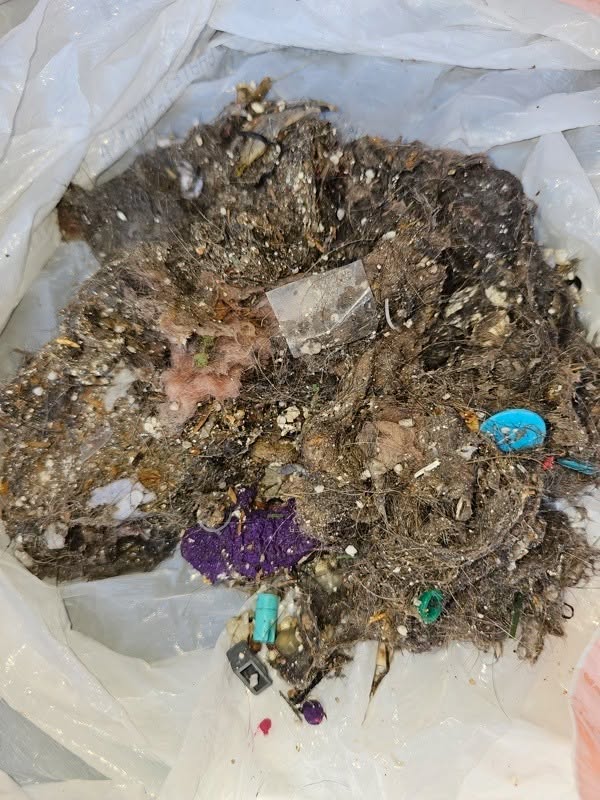
This is what came out of one home's duct system. Dust, hair, insulation fragments, and years of debris — all of it was recirculating through the air every time the HVAC ran.
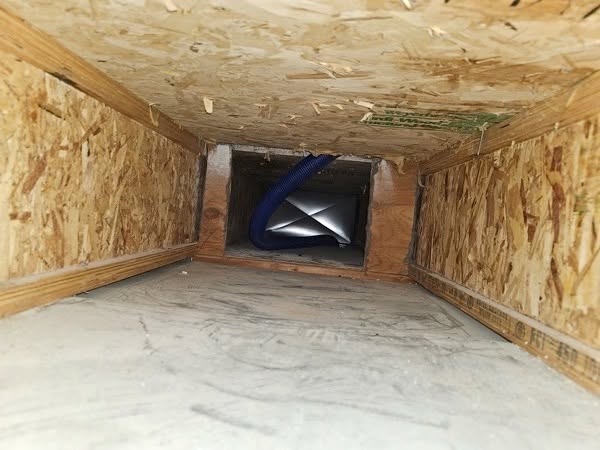
Looking inside the main trunk line in a crawlspace — our blue vacuum hose inserted deep into the ductwork pulling debris from the entire system.
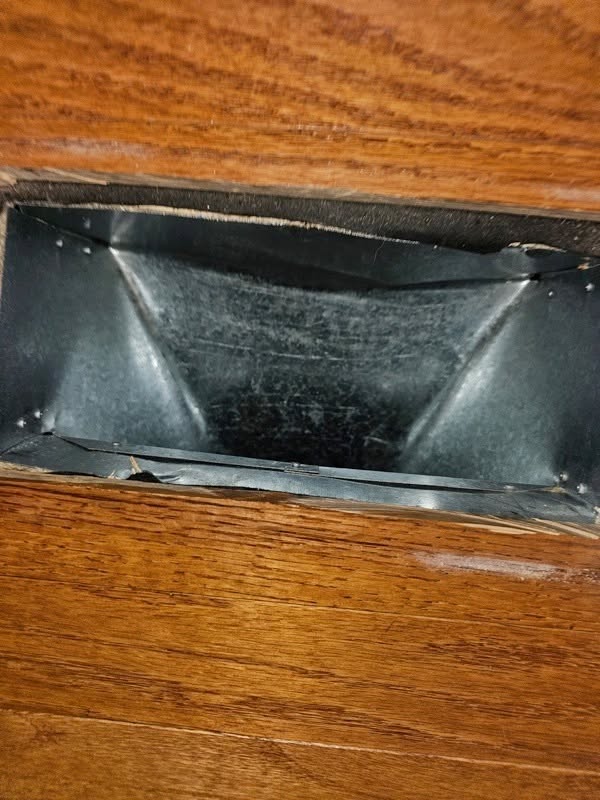
A floor register opened up — the metal duct walls are coated in dust and debris. This is what sits directly below your floor vents.
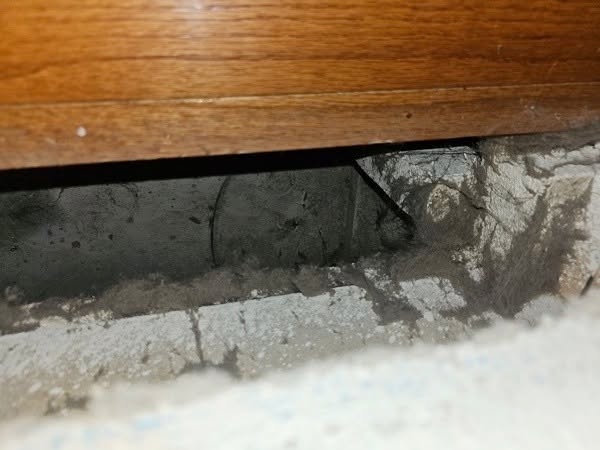
The gap between the floor and duct register — packed with years of accumulated dust, hair, and debris that gets blown into the room every time the system kicks on.
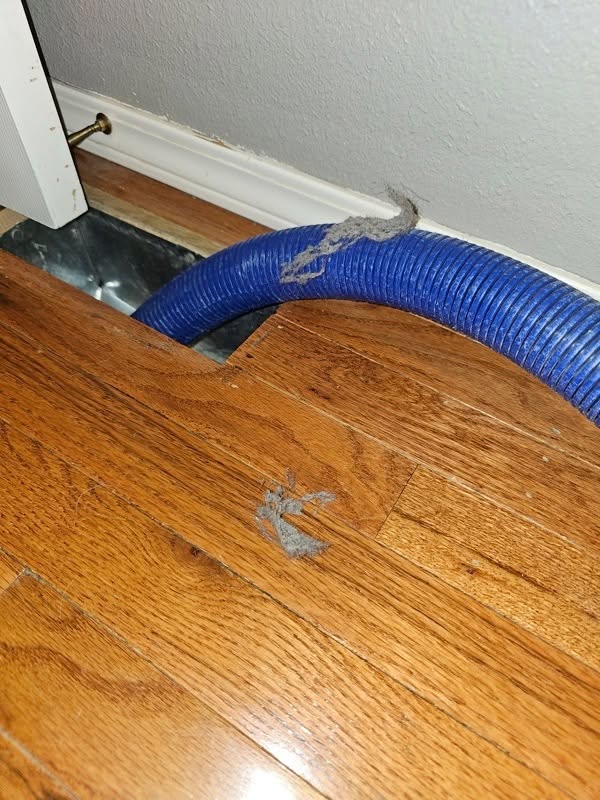
Our extraction hose going to work — notice the clumps of dust already pulled out and sitting on the hardwood floor. This is what was in your air.
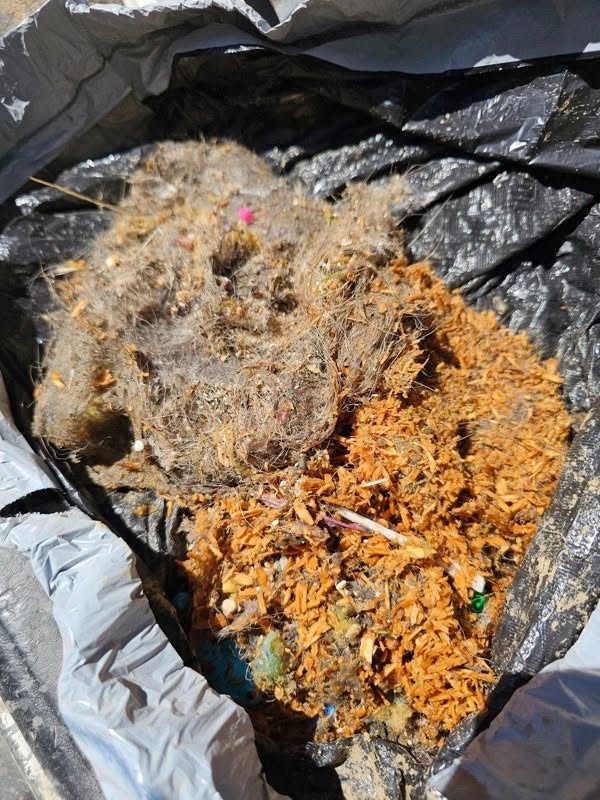
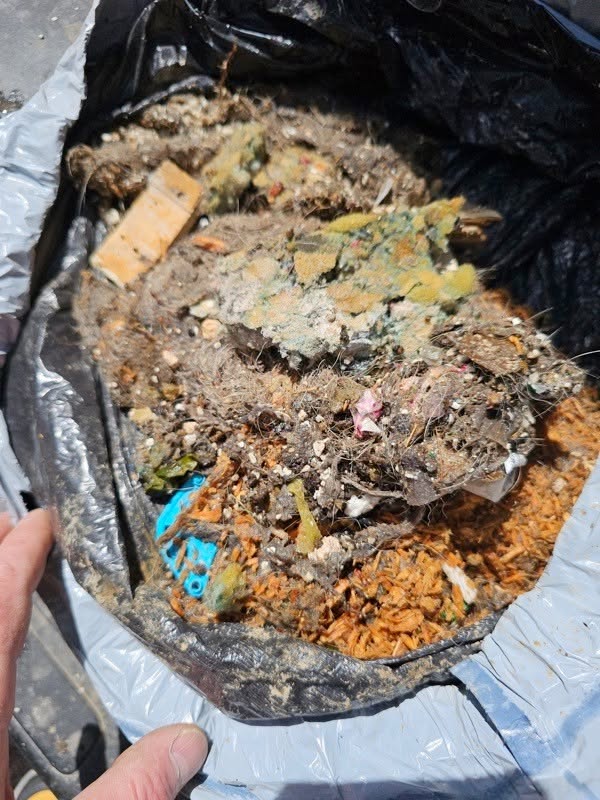
A full bag of what came out — orange insulation fibers, hair, dust, and organic debris. This material was inside the ducts circulating through the home.
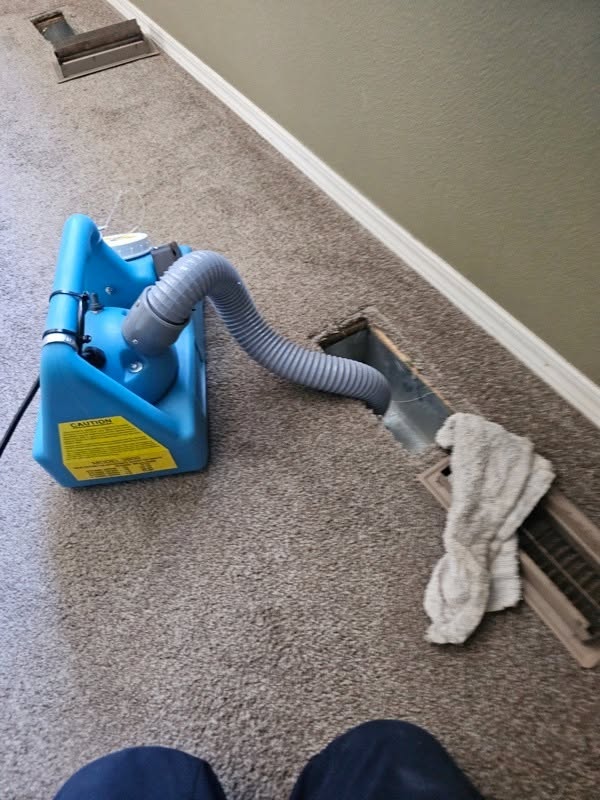
Our professional duct cleaning equipment connected directly to a floor register. This is what a real air duct cleaning looks like — not a shop vac.
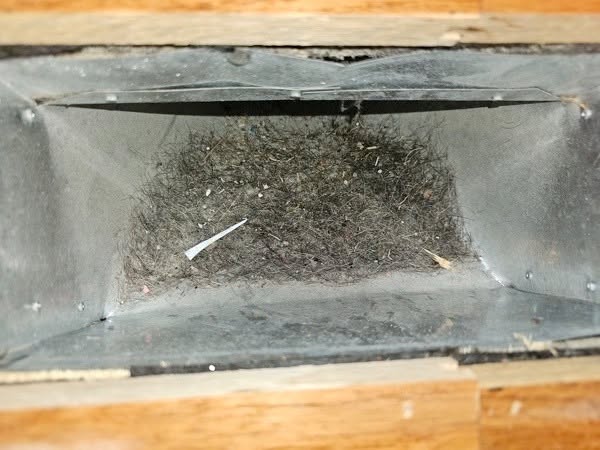
Inside a floor duct before cleaning — a thick mat of hair, dust, and debris coating every surface. Every breath in this home passed through this.
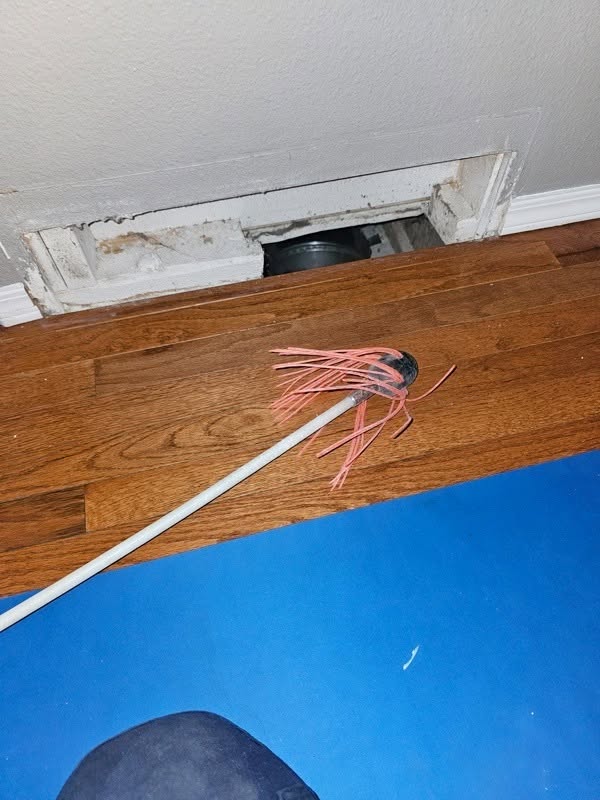
Extraction in progress on hardwood floors — the debris pulled out is visible right on the floor around the vent opening.
The final haul — multiple types of debris including insulation, hair, dust, and years of accumulated organic matter. All of this was inside the duct system of a single Colorado Springs home.
What you are looking at is the result of years — sometimes decades — of normal household activity. Dust, skin cells, pet dander, pollen, insulation fibers, and other particles that have been recirculating through the home every time the HVAC system runs. Every breath taken in that home passed through this material.
This is why we take air duct cleaning seriously. This is why we use truck-mounted equipment with maximum suction rather than portable units. And this is why we don't rush the job.
DIY Air Duct Cleaning: Why It Doesn't Work
We understand the appeal of DIY. A shop vac and a brush attachment seem like they should be able to handle the job. Here is why they can't:
Reach: Residential duct systems extend throughout the entire house — through walls, floors, and ceilings. A shop vac can clean the first few inches of a register opening. It cannot reach the main trunk lines, the return air plenums, or the air handler components where the most significant contamination accumulates.
Suction: Professional truck-mounted vacuum systems generate suction measured in thousands of cubic feet per minute. A shop vac generates a fraction of that. Without adequate suction, dislodged debris doesn't get captured — it gets redistributed into the living space.
Negative pressure: Without establishing negative pressure in the system before agitating debris, you risk blowing contamination into rooms rather than capturing it. This can temporarily worsen air quality significantly.
Mold identification: A DIY cleaning cannot identify mold growth inside ductwork. If mold is present and not properly treated, cleaning can actually spread spores more widely through the system.
Equipment damage: Improper use of brushes or compressed air in ductwork can damage flex duct, dislodge connections, or damage the air handler. Professional technicians know how to clean aggressively without causing damage.
The bottom line: DIY duct cleaning is better than nothing for surface-level register cleaning, but it is not a substitute for professional cleaning of the full duct system.
Air Duct Cleaning and Your HVAC System's Efficiency
Beyond the health benefits, clean air ducts have a direct impact on your HVAC system's performance and lifespan.
Airflow restriction: When ducts are clogged with debris, airflow is restricted. Your HVAC system has to work harder to move the same amount of air, which means longer run times, higher energy consumption, and more wear on the blower motor and other components.
Coil efficiency: A dirty evaporator coil — coated with dust and debris — cannot transfer heat efficiently. This reduces both heating and cooling capacity and forces the system to run longer to reach the set temperature.
Filter life: When ducts are heavily contaminated, filters clog faster. Homeowners who find themselves changing filters every few weeks instead of every few months often have a duct contamination problem.
System lifespan: HVAC systems that run harder and longer due to restricted airflow wear out faster. A system that should last 15–20 years may need replacement in 10–12 years if it has been operating with heavily contaminated ductwork throughout its life.
The Department of Energy estimates that 25–40% of the energy used for heating or cooling is wasted due to contaminants in HVAC systems. Clean ducts are not just a health investment — they are a financial one.
Choosing an Air Duct Cleaning Company in Colorado Springs
The air duct cleaning industry has a well-documented problem with unethical operators. The "$49 whole-house special" that shows up in your mailbox is almost always a bait-and-switch — a low price to get in the door, followed by high-pressure upsells for services that may or may not be necessary.
Here is what to look for when choosing a company:
NADCA membership or IICRC certification: These organizations set standards for air duct cleaning and require members to follow established best practices. Absolute Floors & More is IICRC certified.
Truck-mounted equipment: Ask specifically whether the company uses truck-mounted vacuum equipment. Portable units simply do not generate the suction needed for a thorough cleaning.
Transparent pricing: A reputable company will give you a clear, all-inclusive price before the job starts. Be wary of any company that quotes a very low price and then adds charges once they are in your home.
Before-and-after documentation: A professional company should be able to show you what they removed. Photos or video of the duct interior before and after cleaning are a sign of a company that stands behind its work.
No high-pressure upsells: If a technician is pushing hard for additional services — especially expensive ones like "duct sealing" or "antimicrobial treatments" — without clear evidence that they are needed, that is a red flag.
References and reviews: Check Google, HomeAdvisor, and Angi for reviews. Look for consistent patterns — both positive and negative.
Air Duct Cleaning Costs in Colorado Springs
Pricing for air duct cleaning varies based on the size of the home, the number of vents, the level of contamination, and whether additional services (coil cleaning, sanitization) are needed.
For a standard Colorado Springs home, professional air duct cleaning typically ranges from $450 to $1,000. Larger homes, heavily contaminated systems, or systems requiring mold remediation will cost more.
Be extremely skeptical of prices below $150 for a whole-house cleaning. At that price point, the company is either using inadequate equipment, planning to upsell aggressively once inside, or both.
At Absolute Floors & More, we provide transparent, upfront pricing before any work begins. No surprises. No pressure. Just honest work at a fair price.
Combining Air Duct Cleaning With Other Services
Air duct cleaning pairs naturally with several other services we offer:
Dryer vent cleaning: Your dryer vent is a separate system from your HVAC ducts, but it has its own serious contamination and fire risk issues. Schedule both services at the same location during the same appointment and we offer a discounted dryer vent cleaning rate. It is the best value compared with scheduling separate visits. Ask about the Air Duct Cleaning + Dryer Vent Cleaning combination discount when you call.
Carpet cleaning: Dirty carpets and dirty air ducts are often related — both accumulate the same types of particles, and cleaning one without the other means the contamination cycle continues. A freshly cleaned carpet in a home with dirty ducts will re-accumulate dust faster than normal.
Deodorization: If your home has persistent odors — pet smells, smoke, mustiness — the source is often in the ductwork. Cleaning the ducts and treating with a professional deodorizer addresses the problem at the source rather than masking it.
Schedule Your Air Duct Cleaning in Colorado Springs
Absolute Floors & More serves Colorado Springs and the surrounding 50-mile radius, including Fountain, Pueblo, Monument, Castle Rock, Woodland Park, and more. We are locally owned, IICRC certified, and have been serving this community for over 23 years.
If you are ready to breathe cleaner air in your home — or if you just want an honest assessment of what is in your duct system — give us a call at (719) 896-6274 or request a free quote. Ask about adding dryer vent cleaning during the same visit for our discounted combination rate. We will tell you exactly what we find and exactly what it will cost to fix it. No pressure. No surprises.
Your family deserves to breathe clean air. Let us help make that happen.
Explore Topics
Written by
Nathaniel Lemieux
Content creator and writer sharing insights and stories.


