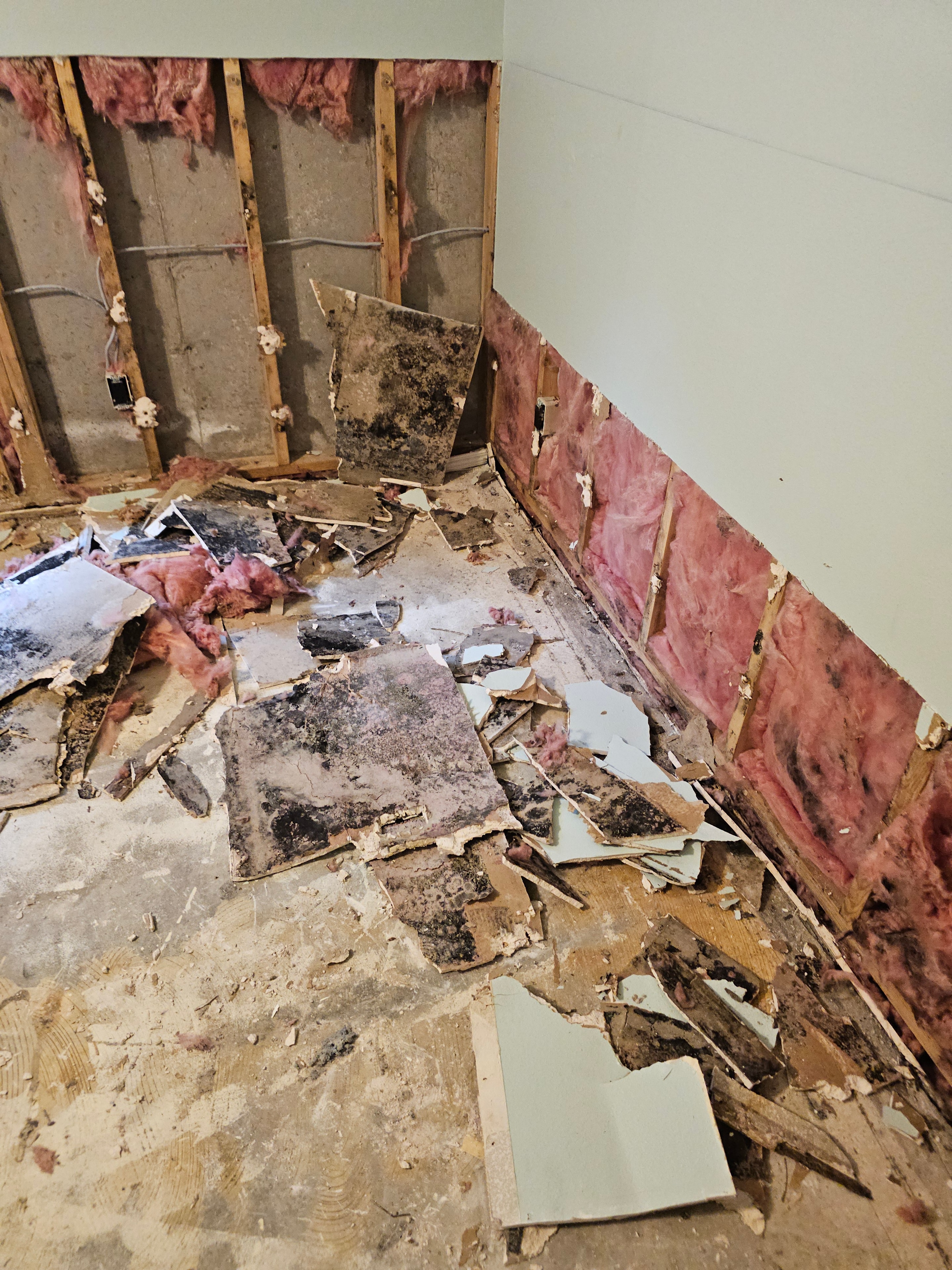
Mold Damage in Your Home: The Complete Guide to Understanding, Treating, and Preventing the Silent Destroyer
Mold is not just an eyesore. It is a living organism that eats your home from the inside out, destroys your air quality, and poses serious health risks to every person and pet under your roof. This is everything Colorado Springs homeowners need to know — and why getting it right the first time is not optional.

There is a moment that every homeowner dreads. You pull back a piece of baseboard. You lift a corner of wet drywall. You peel back the carpet near a wall that has felt damp for longer than you want to admit. And there it is — black, spreading, alive — covering surfaces that were supposed to be solid and safe.
That moment is not the beginning of the problem. It is the moment you finally see a problem that has been growing, spreading, and damaging your home and your family's health for weeks, months, or possibly years.
Mold does not announce itself. It works in the dark, behind walls, under floors, inside ceiling cavities, and deep in the paper backing of drywall. By the time you can see it, smell it, or feel its effects, you are almost certainly dealing with a colony that has already established itself far beyond what is visible.
At Absolute Floors & More, we have responded to mold situations across Colorado Springs for over 23 years. We have seen what mold does to homes, to belongings, and to families. We have seen what happens when it is handled correctly — and what happens when it is not.
This guide is the most complete resource we know how to write on the subject. Read it carefully. Share it with anyone who owns a home. The information here could save your health, your home, and tens of thousands of dollars.
What Mold Actually Is — And Why It Behaves the Way It Does
Most people think of mold as a stain or a surface problem. It is neither. Mold is a living fungal organism — one of the most resilient and adaptable life forms on the planet. It has existed for hundreds of millions of years, and it is extraordinarily good at surviving in conditions that would kill most other organisms.
Mold reproduces by releasing microscopic spores into the air. These spores are everywhere — in the outdoor air, in the air inside your home right now, on virtually every surface you touch. Under normal conditions, the spore count in your home is low enough that your immune system handles it without difficulty. You never know it is there.
But give mold what it needs — moisture, an organic food source, and moderate temperatures — and those dormant spores activate, germinate, and begin building a colony with terrifying speed.
What mold needs to grow:
- Moisture — This is the critical factor. Mold cannot grow without water. A relative humidity above 60%, a slow leak, condensation on a cold surface, or a flood event that was not fully dried within 24–48 hours is all it takes.
- Food — Mold eats organic material. Drywall paper. Wood framing. Carpet backing. Insulation. Cardboard. Fabric. The structural materials of your home are a buffet.
- Temperature — Mold thrives between 40°F and 100°F. That is the temperature range of virtually every living space in every home in Colorado Springs, year-round.
- Time — Mold can begin colonizing a wet surface in as little as 24 to 48 hours. Within a week, a small moisture event can produce a significant colony. Within a month, it can spread through an entire wall cavity.
Remove any one of these factors — particularly moisture — and mold cannot grow. This is why moisture control is the foundation of every legitimate mold prevention and remediation strategy.
The Many Types of Mold Found in Colorado Springs Homes
Not all mold is the same. There are over 100,000 known species of mold, and dozens of them are commonly found in residential settings. Here are the ones we encounter most frequently:
Stachybotrys Chartarum — "Black Mold"
This is the one that gets the most attention, and for good reason. Stachybotrys — commonly called black mold or toxic black mold — is a dark greenish-black mold that grows on materials with high cellulose content: drywall, wood, paper, and ceiling tiles. It requires sustained moisture to grow, which means it is typically found in areas that have had chronic water problems — slow leaks, flooding, or persistent condensation.
Stachybotrys produces mycotoxins — toxic compounds that can cause serious health effects in humans and animals. It is not the only mold that produces mycotoxins, but it is among the most potent.
Aspergillus
One of the most common molds found in homes, Aspergillus comes in many species and colors — white, yellow, green, brown, and black. It grows on walls, insulation, paper, and fabrics. Some species are relatively benign; others produce mycotoxins and can cause serious respiratory illness, particularly in immunocompromised individuals.
Penicillium
Penicillium is a blue-green mold that spreads rapidly and is commonly found on water-damaged building materials, carpets, and insulation. It produces a musty odor and can cause allergic reactions and respiratory issues. It is one of the fastest-spreading molds in residential settings.
Cladosporium
Unlike many molds, Cladosporium can grow in both warm and cool conditions, making it particularly common in Colorado's variable climate. It appears as an olive-green or brown mold and is frequently found on fabrics, carpets, and wood surfaces. It is a common trigger for asthma and allergic reactions.
Alternaria
Alternaria is a large-spored mold that is one of the most common causes of allergic reactions worldwide. It grows in damp areas — under sinks, in showers, in areas with water damage — and spreads rapidly. Its spores are large enough to be trapped in the upper respiratory tract, making it a significant allergen.
Chaetomium
Chaetomium is a mold that grows on water-damaged drywall and has a distinctive musty, earthy odor. It starts white or gray and darkens to brown or black as it matures. It is frequently found alongside Stachybotrys in severely water-damaged homes and produces mycotoxins that can cause neurological symptoms with prolonged exposure.
The Real Photos: What Mold Looks Like Behind Your Walls
These are not stock photos. These are real images from actual jobs our team has responded to in Colorado Springs. This is what mold looks like when it has been growing unchecked inside a wall cavity or under flooring.
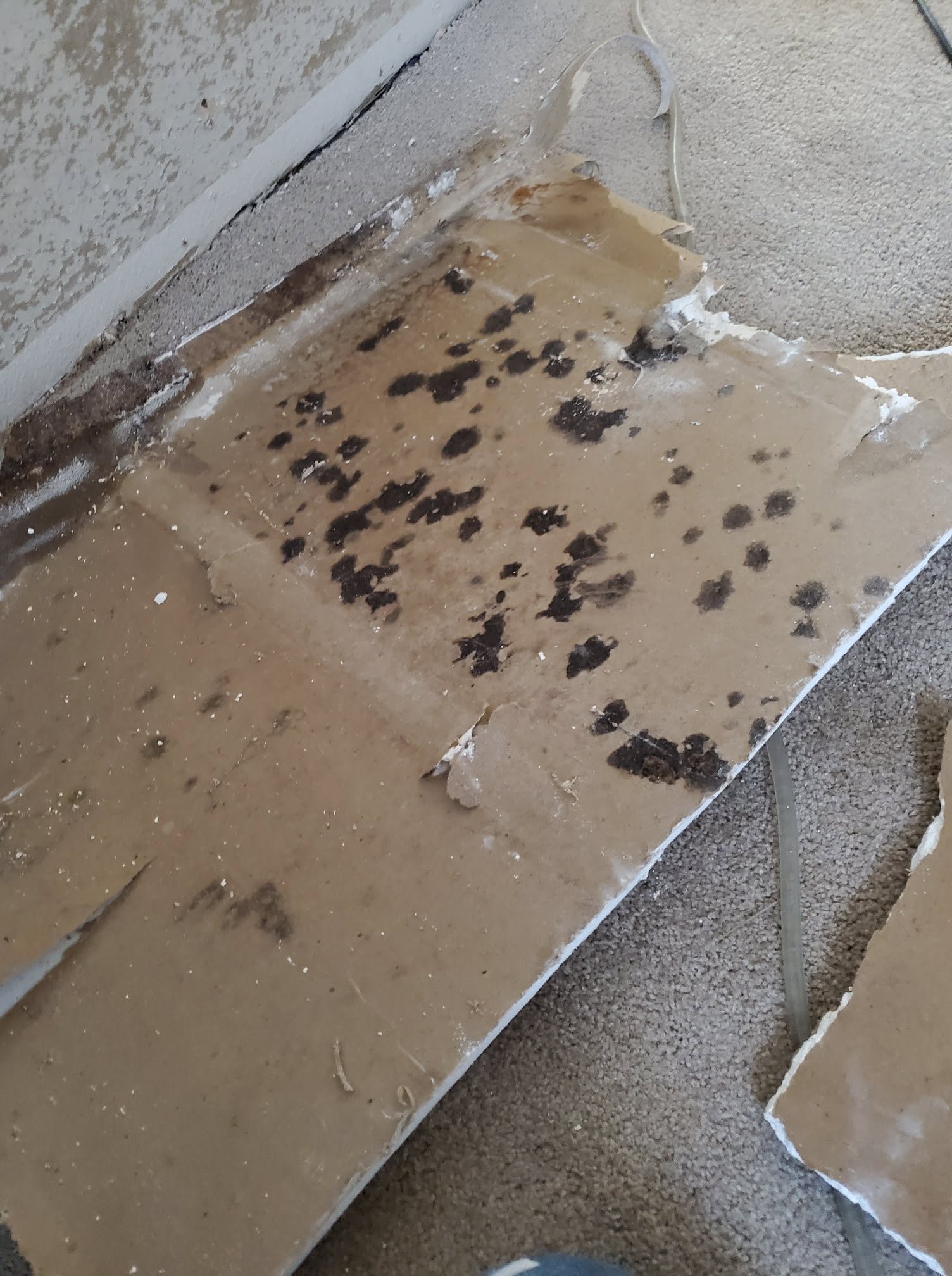
Look at that image carefully. What you are seeing is the paper backing of drywall that has been exposed to sustained moisture. The black colonies are established mold growth — not surface discoloration, not dirt, not a stain that can be wiped away. This is a living organism that has consumed the organic material of the drywall paper and is actively spreading.
The homeowner whose wall this came from had no idea. There was no visible mold anywhere in the room. The wall looked normal. The only sign was a faint musty smell that they had attributed to the age of the house.
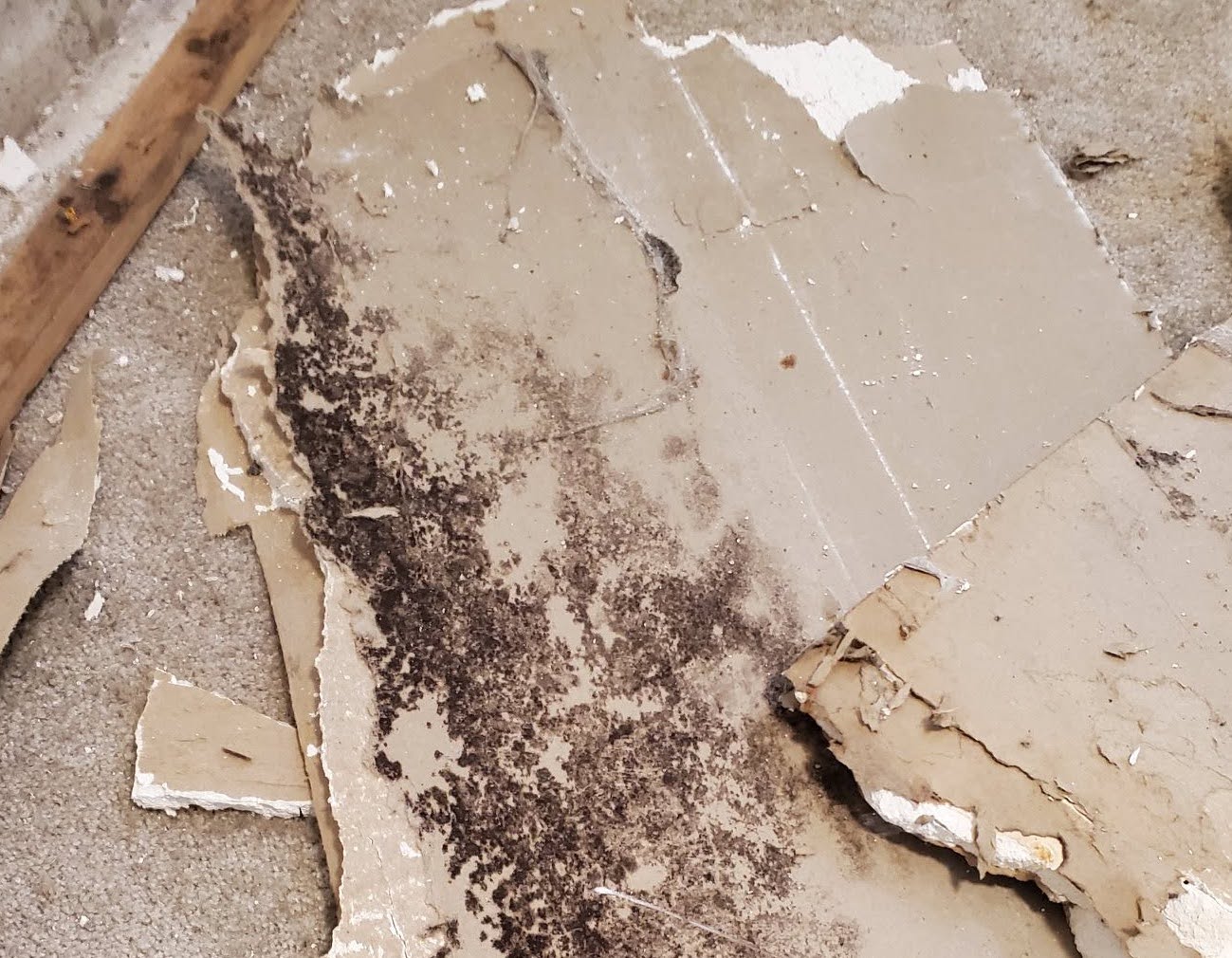
This second image shows a more advanced case — a larger section of drywall removed during remediation, revealing the full extent of the colony. Notice how the mold has spread along the paper backing in a pattern that follows the moisture gradient. The darkest, densest growth is where the moisture was most concentrated. The lighter, more diffuse growth at the edges shows the colony actively expanding outward.
This is what "it's probably just a small spot" looks like when you open the wall.
Where Mold Hides in Colorado Springs Homes
Mold is a master of concealment. The places it grows most aggressively are almost always the places homeowners look last — or never. Here is a comprehensive map of the most common hidden mold locations:
Behind Drywall and Inside Wall Cavities
This is the most dangerous location because it is completely invisible until the wall is opened. A slow pipe leak, a failed window seal, or water intrusion from outside can saturate the drywall and the wood framing behind it. The paper backing of drywall is one of mold's favorite food sources, and a wall cavity provides the dark, enclosed, humid environment it thrives in.
By the time mold is visible on the surface of drywall, the colony behind it is typically far more extensive than what you can see.
Under Carpet and Carpet Padding
Carpet and carpet padding are extraordinarily good at trapping and holding moisture. A spilled drink that wasn't fully dried. A slow leak from a baseboard heater. Water that seeped under a door during a heavy rain. Any of these can saturate the carpet padding — which is essentially a sponge — and create ideal mold conditions that persist for months.
The carpet surface may look and feel dry while the padding underneath is actively growing mold. The first sign is often a persistent musty smell that seems to come from the floor.
In the Subfloor
Below the carpet and padding is the subfloor — typically oriented strand board (OSB) or plywood. Both are organic materials that mold consumes readily. Water that penetrates through the carpet and padding reaches the subfloor and can cause significant structural damage in addition to mold growth.
Around Windows and Doors
Window and door frames are common sites for condensation and water intrusion. In Colorado's climate, the temperature differential between inside and outside during winter creates condensation on window frames and sills. Over time, this moisture works its way into the surrounding drywall and framing.
In Bathrooms — Behind Tile and Under Vanities
Grout and caulk in showers and tub surrounds degrade over time, allowing water to penetrate behind the tile. The cement board or drywall behind the tile becomes saturated, and mold establishes itself in a location that is completely invisible without removing the tile.
Under bathroom vanities, slow drips from supply lines or drain connections create persistent moisture that is often not noticed until the cabinet floor is visibly damaged.
In Basements and Crawl Spaces
Colorado Springs has a significant number of homes with basements and crawl spaces, and both are high-risk mold environments. Basements are below grade, which means they are in contact with soil moisture on multiple sides. Crawl spaces are often poorly ventilated and can accumulate moisture from the ground below.
Mold in a crawl space is particularly insidious because the air in the crawl space is drawn up into the living space through a process called the stack effect — warm air rising through the house pulls air from below, carrying mold spores with it.
In HVAC Systems and Air Ducts
We covered this in our air duct cleaning guide, but it bears repeating here: HVAC systems are one of the most effective mold distribution mechanisms in a home. If mold establishes itself in the air handler, on the evaporator coil, or inside the ductwork, every time the system runs it distributes spores throughout the entire house.
In Attics
Attic mold is extremely common and almost always goes undetected until a home inspection or roof repair reveals it. Inadequate ventilation, bathroom exhaust fans that vent into the attic instead of outside, and roof leaks all create the moisture conditions mold needs. Attic mold can affect the structural integrity of roof sheathing and rafters.
The Health Effects of Mold Exposure: What the Science Says
The health effects of mold exposure are real, well-documented, and in some cases severe. The specific effects depend on the type of mold, the concentration of spores, the duration of exposure, and the health status of the individual.
Respiratory Effects
Mold spores are inhaled and can cause a range of respiratory symptoms:
- Allergic rhinitis — Runny nose, sneezing, nasal congestion, and postnasal drip. These symptoms are often mistaken for seasonal allergies or a persistent cold.
- Asthma exacerbation — For people with asthma, mold exposure is one of the most common triggers for attacks. Prolonged exposure can cause asthma to develop in people who did not previously have it.
- Hypersensitivity pneumonitis — An inflammatory lung condition caused by repeated exposure to mold spores. Symptoms include fever, chills, muscle aches, and shortness of breath that appear hours after exposure and can become chronic with repeated exposure.
- Chronic sinusitis — Persistent sinus inflammation and infection that does not respond to standard antibiotic treatment is frequently linked to mold exposure.
- Pulmonary hemorrhage — In severe cases, particularly with Stachybotrys exposure in infants, mold mycotoxins have been linked to pulmonary hemorrhage (bleeding in the lungs). This is rare but has been documented.
Neurological Effects
Mycotoxins produced by certain mold species — particularly Stachybotrys and Chaetomium — can have neurological effects with prolonged exposure:
- Cognitive impairment — difficulty concentrating, memory problems, "brain fog"
- Headaches, often chronic and severe
- Dizziness and balance problems
- Mood changes, anxiety, and depression
- In severe cases, tremors and other neurological symptoms
These effects are often dismissed or misdiagnosed because they are nonspecific and can have many causes. Patients with unexplained neurological symptoms who live in water-damaged homes should always have mold exposure considered as a potential contributing factor.
Immune System Effects
Mycotoxins are immunosuppressive — they impair the immune system's ability to fight infection. People living in mold-contaminated homes often experience:
- Frequent infections that take longer than normal to resolve
- Reactivation of dormant infections
- Increased susceptibility to opportunistic infections
For people who are already immunocompromised — due to cancer treatment, HIV, organ transplant, or autoimmune disease — mold exposure can be life-threatening.
Skin and Eye Effects
Direct contact with mold or exposure to high concentrations of airborne spores can cause:
- Skin rashes, hives, and dermatitis
- Eye irritation, redness, and watering
- In some cases, fungal skin infections
Who Is Most Vulnerable?
While mold affects everyone to some degree, certain groups are at significantly higher risk:
- Infants and young children — Their immune systems are still developing, they breathe more air relative to their body weight, and they spend more time on floors where mold spore concentrations are highest.
- Elderly individuals — Immune function declines with age, and pre-existing respiratory conditions are more common.
- People with asthma or allergies — Mold is one of the most potent triggers for both conditions.
- Immunocompromised individuals — Anyone with a compromised immune system faces dramatically elevated risk from mold exposure.
- Pregnant women — Mycotoxin exposure during pregnancy has been linked to adverse outcomes in some studies.
- Pets — Dogs and cats are also affected by mold exposure and can develop respiratory illness, skin conditions, and other health problems.
The Warning Signs You Should Never Ignore
Mold rarely announces itself with a visible colony on a prominent wall. More often, it signals its presence through subtler signs that are easy to dismiss or attribute to other causes. Here is what to watch for:
Sensory signs:
- A persistent musty, earthy, or damp smell — especially in specific rooms or areas of the house
- Visible discoloration on walls, ceilings, or floors — not just black, but also green, white, gray, or orange
- Water stains on walls or ceilings, even old ones that appear dry
- Peeling, bubbling, or warping paint or wallpaper
- Warped or buckled flooring
- Visible condensation on windows, walls, or pipes
Health signs:
- Symptoms that improve when you leave the house and return when you come back — this is one of the most reliable indicators of indoor mold exposure
- Chronic respiratory symptoms that don't respond to standard treatment
- Unexplained fatigue, headaches, or cognitive difficulties
- Worsening asthma or allergies
- Frequent sinus infections
- Skin rashes without a clear cause
Structural signs:
- Soft spots in walls, floors, or ceilings
- Doors or windows that stick or don't close properly (can indicate structural warping from moisture)
- Rust stains around pipes or fixtures
- Efflorescence (white mineral deposits) on basement walls — a sign of water moving through the foundation
History signs:
- Any history of flooding, even if it was "cleaned up"
- Any history of roof leaks, even if repaired
- Any history of plumbing leaks, even if fixed
- A home that was vacant for an extended period
- A home with a history of high humidity or poor ventilation
Why DIY Mold Removal Almost Always Makes Things Worse
We understand the impulse. You see mold. You go to the hardware store. You buy bleach or a mold-killing spray. You scrub the surface. The visible mold disappears. Problem solved.
Except it is not solved. It is almost certainly worse.
Here is why DIY mold removal fails — and why it can actively spread the problem:
Bleach Does Not Kill Mold on Porous Surfaces
This is the most important thing to understand. Bleach is effective at killing mold on non-porous surfaces like tile and glass. On porous surfaces — drywall, wood, grout, carpet — bleach cannot penetrate deep enough to reach the mold's root structure (called hyphae). The surface looks clean, but the mold is alive and intact below the surface. Within days or weeks, it regrows.
Worse, the water in bleach solutions can actually add moisture to porous materials, feeding the mold you are trying to kill.
Disturbing Mold Without Containment Spreads Spores
When you scrub, sand, or disturb a mold colony without proper containment, you release enormous quantities of spores into the air. These spores travel throughout the house, settle on new surfaces, and establish new colonies wherever moisture conditions allow. A mold problem in one room can become a whole-house problem after an improper DIY remediation attempt.
Professional mold remediation always begins with containment — sealing off the affected area with plastic sheeting and negative air pressure to prevent spores from escaping into the rest of the house.
You Cannot See What You Cannot See
DIY remediation addresses only what is visible. The mold behind the wall, under the floor, inside the ceiling cavity — none of that gets addressed. You clean the surface, feel satisfied, and the hidden colony continues to grow.
You Cannot Address the Moisture Source
Mold is a symptom. Moisture is the disease. If you clean the mold without identifying and eliminating the moisture source, the mold will return. Every time. Professional remediation always includes a moisture investigation to find and address the source — whether it is a plumbing leak, a failed vapor barrier, inadequate ventilation, or water intrusion from outside.
Improper Disposal Spreads Contamination
Mold-contaminated materials — drywall, carpet, insulation — must be properly contained and disposed of. Carrying contaminated materials through the house without containment, or disposing of them improperly, spreads spores and can contaminate areas that were previously clean.
What Professional Mold Remediation Actually Looks Like
Legitimate professional mold remediation is a structured, multi-step process. Here is what it should include:
Step 1: Assessment and Moisture Investigation
Before any remediation begins, a thorough assessment identifies the full extent of the mold growth — including areas that are not visually accessible — and locates the moisture source. This may involve moisture meters, thermal imaging cameras, and in some cases, air quality testing to measure spore concentrations.
The moisture source must be identified and corrected before remediation begins. Remediating mold without fixing the moisture source is like bailing out a boat without plugging the hole.
Step 2: Containment
The affected area is sealed off from the rest of the house using heavy plastic sheeting and negative air pressure. Negative air pressure means the air inside the containment zone is kept at lower pressure than the surrounding areas, so air flows into the zone rather than out of it. This prevents spores from escaping into unaffected areas during the remediation process.
HVAC systems serving the affected area are shut down or sealed to prevent spore distribution through the duct system.
Step 3: Personal Protective Equipment
Remediation technicians working in contaminated areas wear full personal protective equipment — N95 or P100 respirators, disposable coveralls, gloves, and eye protection. This is not optional. Mold remediation without proper PPE exposes workers to dangerous concentrations of spores and mycotoxins.
Step 4: Removal of Contaminated Materials
Porous materials that are significantly contaminated — drywall, insulation, carpet, carpet padding — are removed and disposed of. These materials cannot be effectively cleaned; they must be removed. Contaminated materials are double-bagged in heavy plastic before being carried through the house to prevent spore release.
Semi-porous materials like wood framing may be salvageable if the contamination is not too deep. They are cleaned using HEPA vacuuming followed by wire brushing and treatment with an EPA-registered antimicrobial.
Step 5: HEPA Vacuuming and Cleaning
All surfaces in the containment zone — including walls, floors, ceilings, and structural members — are HEPA vacuumed to remove loose spores and debris. HEPA filtration captures particles as small as 0.3 microns, which is small enough to capture mold spores.
After vacuuming, surfaces are cleaned with EPA-registered antimicrobial solutions that kill mold at the cellular level.
Step 6: Drying
After cleaning, the affected area must be thoroughly dried before reconstruction begins. Industrial air movers and dehumidifiers are used to bring moisture levels in structural materials down to acceptable levels — typically below 16% moisture content in wood. Reconstruction over wet materials will result in mold regrowth.
Step 7: Air Scrubbing
HEPA air scrubbers run continuously throughout the remediation process and for a period afterward to capture airborne spores and improve air quality in the affected area.
Step 8: Post-Remediation Verification
Before containment is removed and reconstruction begins, a post-remediation verification confirms that the mold has been successfully removed and that spore counts in the affected area are at or below background levels. This may involve visual inspection, surface sampling, or air quality testing.
Step 9: Reconstruction
Once the area has been verified clean and dry, reconstruction can begin — new drywall, insulation, flooring, and finishes. This is also the time to address any structural damage caused by the mold or the moisture event that caused it.
The Cost of Getting It Wrong
We want to be direct about something: inadequate mold remediation is not just ineffective — it is expensive. Here is what happens when mold is not handled correctly the first time:
Regrowth: Mold that is not fully removed, or that is removed without addressing the moisture source, will regrow. You will be back to square one — or worse, because the colony will have had additional time to spread.
Structural damage: Mold consumes organic building materials. Wood framing that is left contaminated long enough will lose structural integrity. We have seen floor joists, wall studs, and roof rafters that were significantly weakened by mold damage. Structural repairs are dramatically more expensive than remediation would have been.
Health costs: The medical costs associated with mold-related illness — doctor visits, specialist referrals, medications, lost work — can be substantial. For individuals with serious mold-related health conditions, these costs can be enormous.
Property value: A home with a history of mold problems — especially if not properly remediated — faces significant challenges at resale. Disclosure requirements mean that known mold history must be reported to buyers, and improper remediation that is later discovered can result in legal liability.
Insurance complications: Many homeowners insurance policies cover mold remediation when it results from a covered water damage event. However, if you attempt DIY remediation and make the problem worse, or if you delay reporting a water damage event, your coverage may be affected.
Mold Prevention: The Only Strategy That Actually Works Long-Term
The most effective mold remediation is the mold that never grows. Here is a comprehensive prevention strategy for Colorado Springs homeowners:
Control Indoor Humidity
Keep indoor relative humidity below 50% — ideally between 30% and 50%. In Colorado's dry climate, this is usually not difficult in summer, but winter heating can create humidity imbalances. Use a hygrometer (inexpensive at any hardware store) to monitor humidity levels. Run exhaust fans in bathrooms and kitchens during and after use.
Address Water Intrusion Immediately
Any water intrusion event — a flood, a pipe leak, a roof leak, a basement seepage — must be addressed within 24 to 48 hours to prevent mold growth. This means not just stopping the water, but drying the affected materials completely. Professional water damage restoration uses industrial drying equipment to achieve this; consumer fans and dehumidifiers are rarely adequate for significant water events.
Inspect and Maintain Plumbing
Slow leaks under sinks, around toilets, and at appliance connections are among the most common causes of hidden mold growth. Inspect under-sink cabinets regularly. Check washing machine hoses and connections. Look for signs of moisture around the base of toilets. Replace supply lines on a schedule rather than waiting for them to fail.
Maintain Your Roof and Gutters
A roof leak is a direct path for water into your home's structure. Inspect your roof annually and after major storms. Keep gutters clean and properly directed away from the foundation. Ensure downspouts discharge at least six feet from the foundation.
Ventilate Properly
Ensure bathroom exhaust fans vent to the outside — not into the attic. Ensure your kitchen range hood vents to the outside. Ensure your dryer vents to the outside and is cleaned regularly (see our dryer vent cleaning guide). Ensure your crawl space has adequate ventilation or a proper vapor barrier.
Inspect After Every Water Event
After any flooding, significant rain event, or plumbing failure, inspect all potentially affected areas carefully. Look for water stains, soft spots, and musty odors. If you have any doubt about whether materials were fully dried, call a professional.
Clean and Maintain Your HVAC System
A clean HVAC system with clean air ducts is less likely to harbor and distribute mold. Change filters regularly. Have your ducts professionally cleaned every 3 to 5 years. Have your evaporator coil inspected and cleaned annually.
Mold and Your Carpet: A Special Concern
Because carpet is one of our specialties, we want to address the relationship between carpet and mold specifically.
Carpet and carpet padding are among the most mold-susceptible materials in a home. They absorb and hold moisture, they provide an organic food source (the natural fibers in carpet backing and padding), and they create a dark, enclosed environment at floor level where moisture can persist.
Any carpet that has been significantly wet — from flooding, a major spill, a plumbing leak, or water intrusion — and was not professionally dried within 24 to 48 hours should be considered potentially mold-contaminated. This is true even if the carpet surface appears dry. The padding beneath it may still be wet, and mold may already be growing.
Signs of mold in carpet:
- Persistent musty odor that does not go away after cleaning
- Discoloration on the carpet surface, particularly near walls or in corners
- Allergy or respiratory symptoms that are worse when on or near the floor
- Visible mold on the carpet backing when a corner is lifted
In most cases, carpet and padding that have been significantly water-damaged and have developed mold growth cannot be saved. They must be removed and replaced. Attempting to clean mold out of carpet padding is not effective — the padding must go.
If you have had water damage and are concerned about your carpet, call us. We will give you an honest assessment of whether the carpet can be saved or needs to be replaced.
When to Call a Professional: The Decision Framework
Call a professional immediately if:
- You can see mold covering an area larger than 10 square feet (roughly 3 feet by 3 feet)
- You suspect mold is growing inside walls, under floors, or in other concealed locations
- Anyone in the household has health symptoms that may be related to mold exposure
- The mold is associated with sewage contamination (sewage backup, toilet overflow)
- You have had any significant water intrusion event in the past 48 hours
- You have had any water intrusion event in the past that was not professionally dried
- You can smell mold but cannot find the source
You may be able to handle it yourself if:
- The mold is on a non-porous surface (tile, glass, metal) and covers a small area
- You can identify and eliminate the moisture source
- No one in the household has health conditions that increase their vulnerability
- You have proper PPE (N95 respirator, gloves, eye protection)
When in doubt, call a professional. The cost of an assessment is far less than the cost of a mold problem that was allowed to grow unchecked.
Call Absolute Floors & More
If you suspect mold in your home, do not wait. Call Absolute Floors & More at (719) 896-6274 for a professional assessment. We serve Colorado Springs and a 50-mile radius.
- Call: (719) 896-6274
- Email: [email protected]
We serve Colorado Springs and the surrounding 50-mile radius. We are locally owned, IICRC certified, and have been protecting Colorado Springs homes and families for over 23 years. When you call us, you get honesty, expertise, and work done right — the first time.
Your home is the most important investment you will ever make. Protect it.
Absolute Floors & More LLC — Colorado Springs, CO — IICRC Certified — Patent Pending Cleaning Process — Veteran Owned
Explore Topics
Written by
Nathaniel Lemieux
Content creator and writer sharing insights and stories.