Why Pet-Proof Padding Can Make Urine Harder to Clean
Moisture-barrier carpet padding can protect against quick spills, but severe pet urine may spread beneath carpet and become harder to flush, extract, and remove.
“Pet-proof” carpet padding sounds like exactly what a pet owner should want. A moisture-resistant barrier is designed to help keep an ordinary spill from soaking into the cushion and reaching the subfloor. For a small accident discovered quickly, that feature can be genuinely helpful.
But severe or repeated dog and cat urine is not an ordinary spill. In real homes, moisture-barrier padding can change where urine travels—and that can make professional pet urine removal much more complicated.
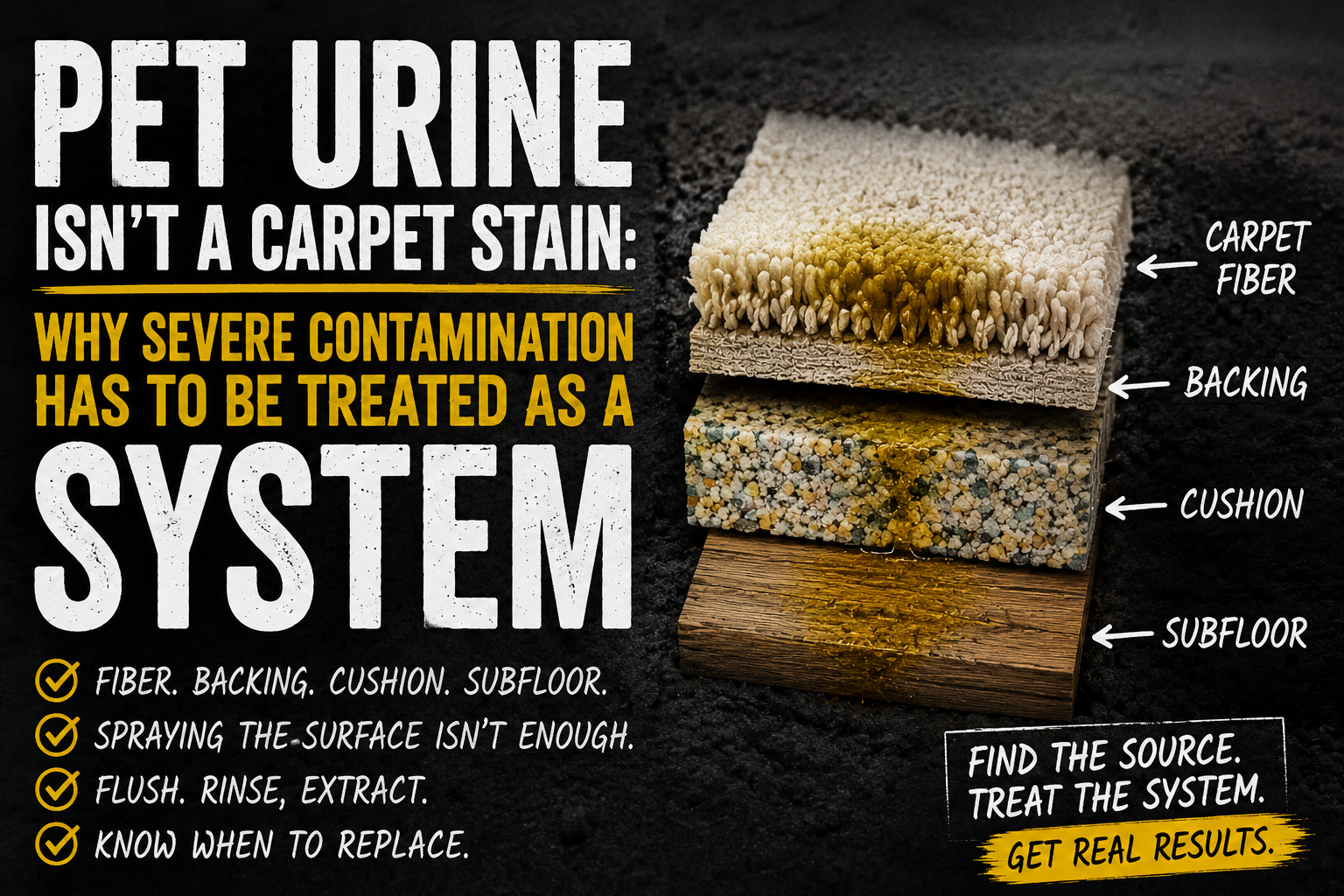
At Absolute Water Damage & Mitigation and Absolute Floors & More, we do not treat pet odor as a surface problem. We look at the entire carpet system: the carpet face, backing, padding, moisture barrier, seams, edges, and subfloor. That is how we determine whether a professional pet urine treatment is practical, whether controlled extraction can help, and when replacement is the more responsible recommendation.
The short answer: pet-proof does not mean urine-proof
Moisture-barrier carpet padding is designed to resist liquid moving downward through the cushion. That can help protect the padding and floor below when a spill is caught and cleaned promptly.
The barrier does not make urine disappear. It changes the path the liquid can take.
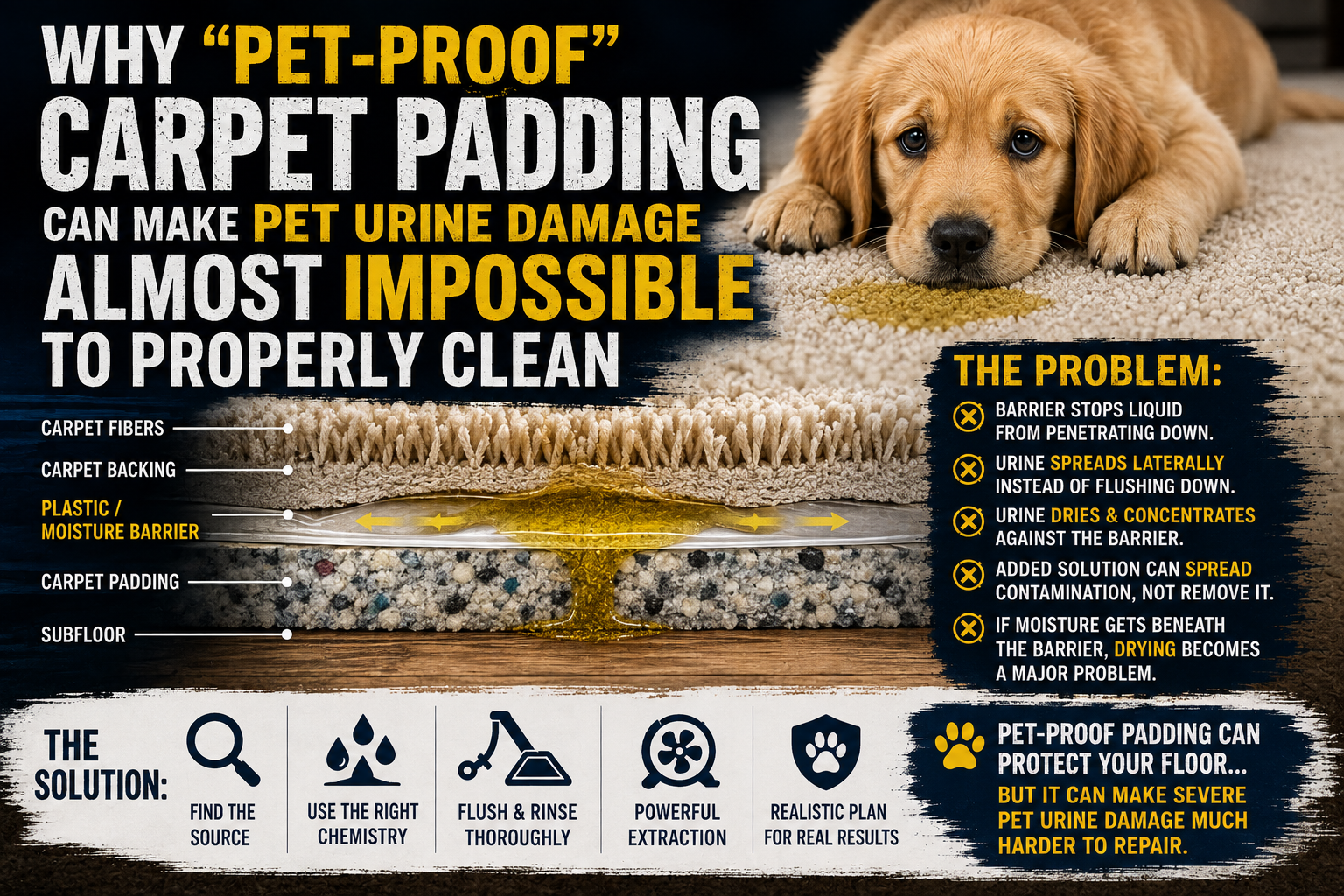
When pet urine reaches the carpet backing and then encounters a moisture-resistant surface, it may spread laterally between the underside of the carpet and the barrier instead of moving straight down into conventional porous padding. The visible spot on top of the carpet may be much smaller than the affected area underneath.
That is why a carpet can look clean after a spot treatment yet still smell like urine later. The source may be trapped below the visible surface.
What is pet-proof or moisture-barrier carpet padding?
What homeowners commonly call pet-proof padding is carpet cushion with a moisture-resistant top layer. Depending on the product, the barrier may be a film, coating, or integrated surface designed to slow or prevent spills from penetrating through the cushion.
This type of product can be useful. It is not inherently bad. The issue is that the same feature that blocks downward liquid movement can complicate professional cleaning when urine contamination is extensive.
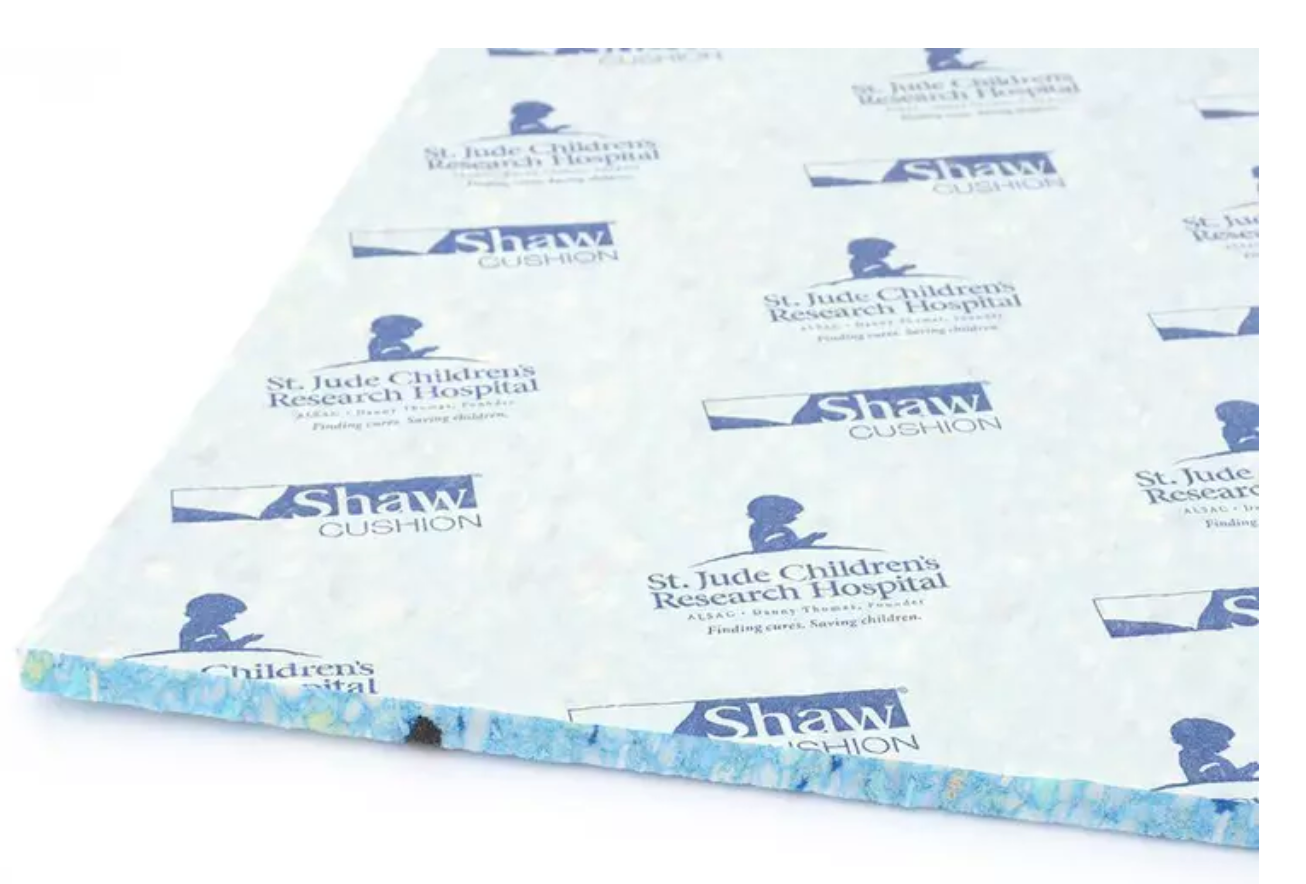
Why urine can spread under carpet instead of soaking down
Imagine pouring water onto a sponge. The water moves into the sponge. Now place a sheet of plastic over that sponge and pour water onto the plastic. The water cannot move downward through the plastic, so it moves across the surface.
A moisture barrier beneath carpet can create a similar condition. Urine that reaches the barrier may travel sideways along the interface between the carpet backing and the moisture-resistant layer.
This can lead to several problems:
- The contamination area below the carpet can be larger than the visible stain.
- Urine can dry and concentrate against the backing and barrier.
- Odor can return when humidity or moisture reactivates dried residues.
- Surface-only cleaning may not reach the full depth or spread of contamination.
- Adding more liquid without a recovery plan can potentially spread contamination farther.
The first professional question is not, “What deodorizer should we spray?” It is, “Where did the urine go?”
Pet urine between carpet and padding is a different problem
With conventional absorbent padding, urine can penetrate into the cushion. That is still a serious issue, but it may allow a professional to use controlled subsurface treatment, flushing, and extraction when the materials and conditions are appropriate.
With moisture-barrier padding, urine can become concentrated at a relatively nonabsorbent interface beneath the carpet. In other words, contamination can be sandwiched between the carpet backing and the barrier.
The homeowner sees carpet. A professional sees a potentially contaminated layer that may be difficult to reach, rinse, and recover without understanding the construction underneath.
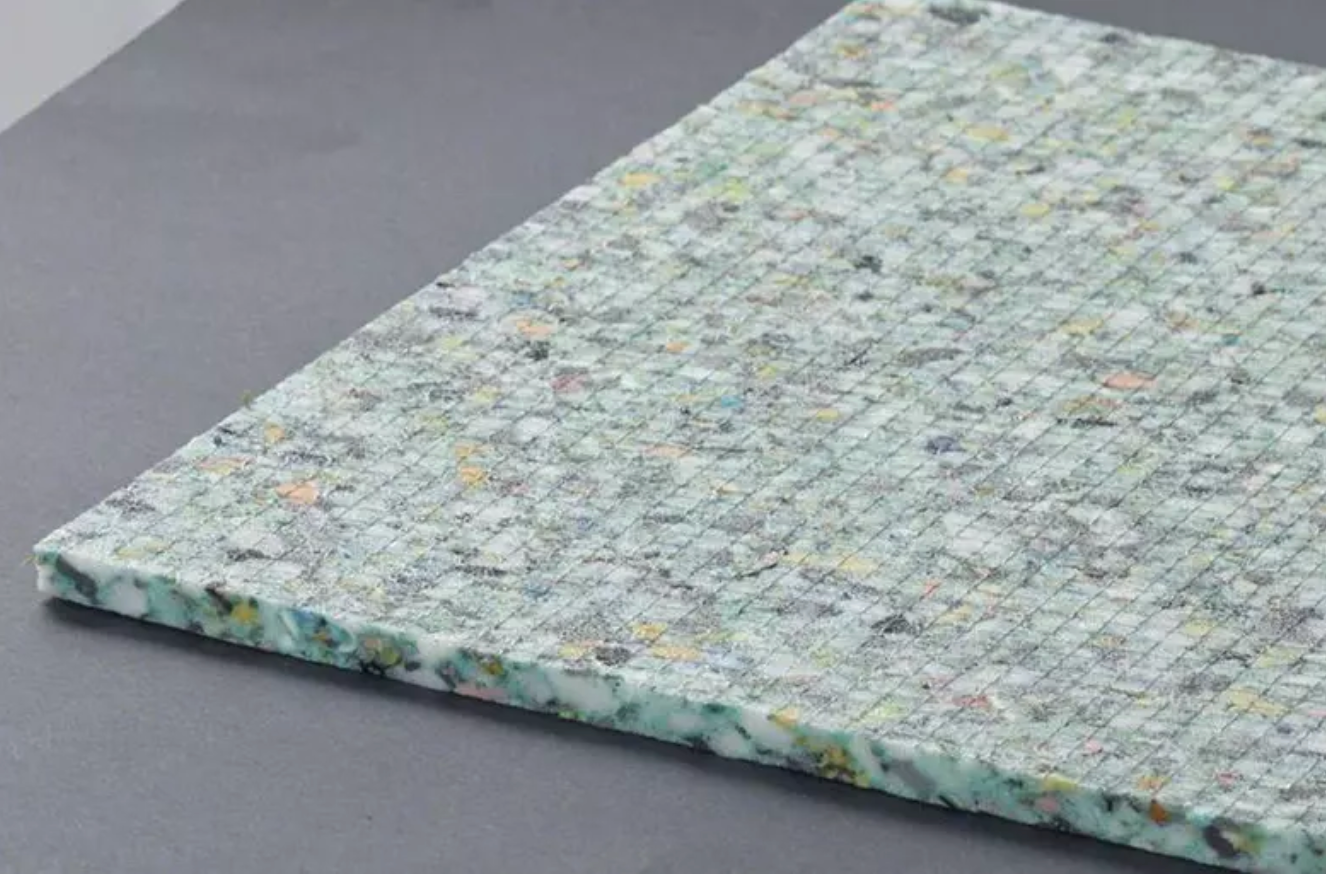
Why more pet treatment is not always better
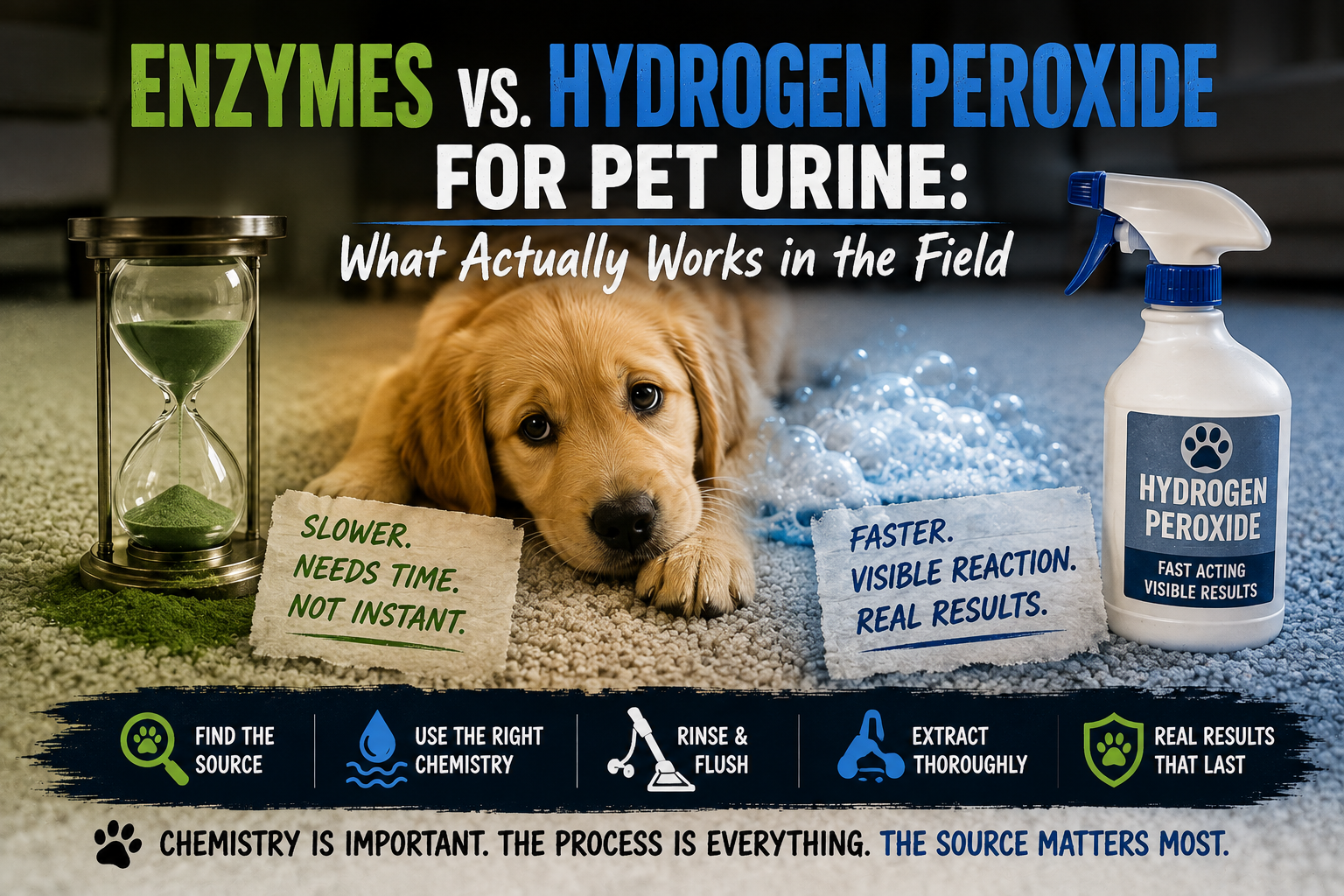
When odor persists, it is tempting to add more enzyme cleaner, peroxide treatment, deodorizer, or water. But chemistry does not repeal physics.
If urine has spread across a moisture barrier, additional solution still has to go somewhere. The barrier remains in place. Instead of flushing vertically through conventional cushion where it can be recovered with appropriate subsurface extraction, added solution may mobilize and spread contamination across the barrier.
A professional treatment can still involve carefully selected chemistry. Enzymes, oxidizers, and other products each have a role in the right situation. But the process must include a realistic plan for where the solution goes and how the loosened contamination will be removed.
Diluting urine is not the same as removing urine. Changing the odor is not the same as decontaminating the carpet system.
Can moisture-barrier carpet padding be flushed?
Not in the same way as conventional porous padding. Controlled subsurface flushing works by reaching contamination, diluting and suspending it, then recovering the solution with specialized extraction equipment. A moisture barrier fundamentally changes that flow path.
For severe pet urine contamination involving this type of padding, a professional may need to consider alternatives such as:
- Targeted treatment and extraction where access is practical
- Inspection of carpet edges, seams, and affected areas
- Lifting or disengaging carpet to evaluate the underside and cushion
- Replacing affected padding to access the carpet backing and subfloor
- Treating the subfloor separately if contamination has reached it
- Recommending replacement when materials cannot be reasonably restored
The correct option depends on the carpet construction, the amount and age of contamination, the location, and whether moisture-sensitive materials are involved.
What if urine gets beneath the barrier?
If urine, cleaning solution, or water reaches beneath a moisture-resistant layer through seams, edges, penetrations, or other pathways, drying can become more complicated. The top of the carpet may feel dry while moisture remains in a restricted area below.
That is why a professional should not assume the entire system is dry based only on the carpet surface. Carpet, cushion, barrier, and subfloor work together as one system. When moisture is trapped within that system, inspection and a controlled plan matter more than adding another chemical.
When should carpet padding be replaced after pet urine?
Replacement is not necessary for every accident. Fresh, limited contamination may be treatable. But padding replacement can be the responsible recommendation when there is severe or repeated urine contamination, persistent odor after appropriate treatment, contamination that cannot be safely flushed and recovered, or evidence that the subfloor may also be affected.
Replacement is not a failure of carpet cleaning. It is an honest recognition of the material limits. Repeatedly saturating a contaminated carpet system that cannot be effectively accessed may cost more and solve less than opening the area and addressing the affected materials directly.
Professional pet urine treatment: the process matters
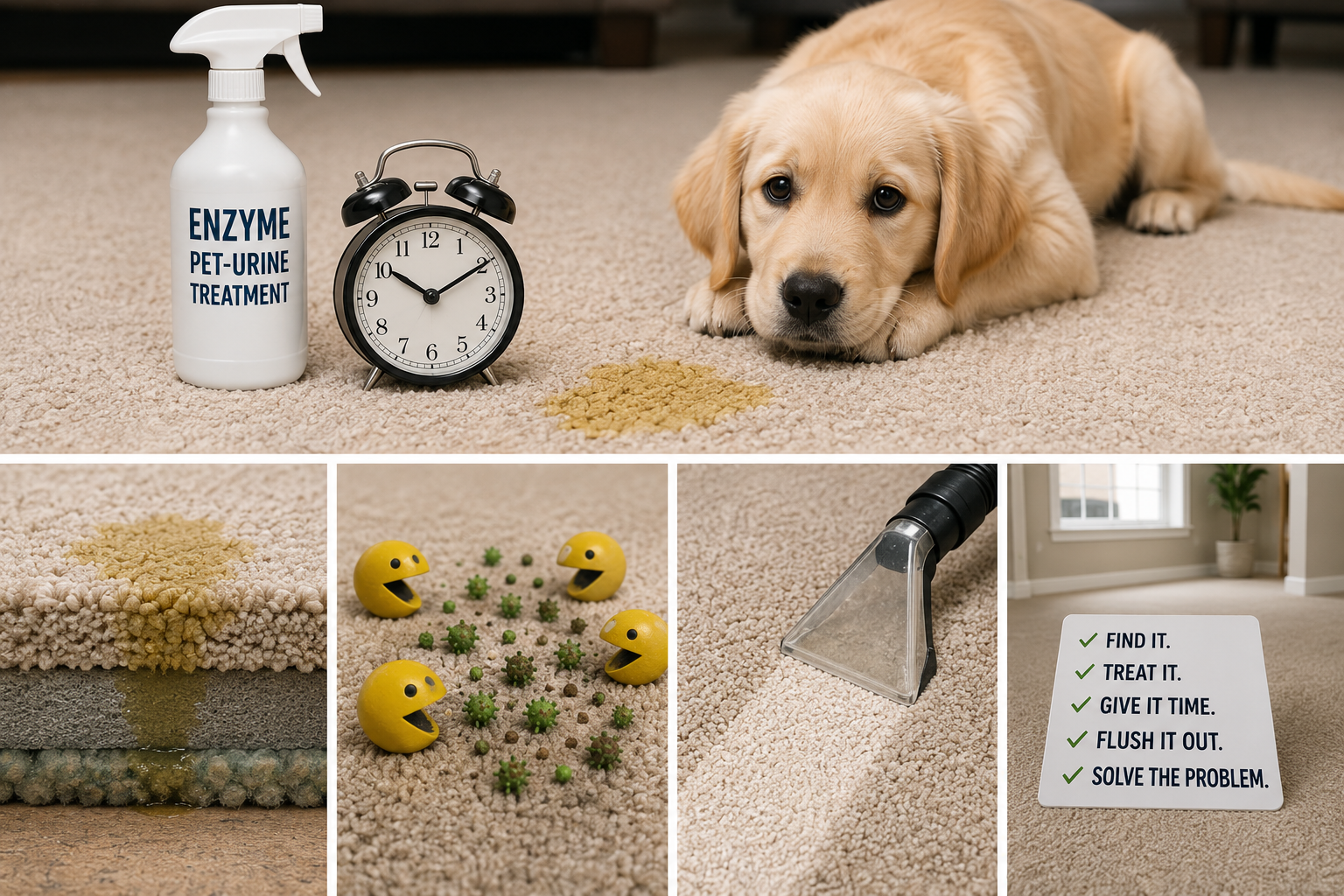
A responsible pet urine remediation plan is built around the source, not a bottle. Our process may include:
1. Identify the likely contamination area
We ask about the history of the odor, repeated accidents, prior treatments, and whether the smell returns with humidity. We inspect the carpet system to understand the likely depth and spread.
2. Determine the carpet and padding construction
Knowing whether padding is conventional or moisture-barrier changes the treatment strategy. It affects how liquid can travel, whether subsurface extraction is practical, and what risks need to be managed.
3. Select appropriate chemistry
Professional pet odor treatment may use enzyme, oxidation-based, or other chemistry depending on the contamination and materials. The product is only one part of the plan.
4. Flush, rinse, and extract when conditions allow
When the construction and contamination make it practical, the objective is to physically remove as much urine residue as possible—not simply cover the odor. Powerful extraction is critical after contamination has been loosened or suspended.
5. Set realistic expectations
If urine is trapped beneath carpet, has reached the subfloor, or has damaged materials beyond reasonable restoration, we explain that clearly. Honest recommendations protect homeowners from paying for repeated treatments that cannot reach the source.
Frequently asked questions about pet-proof padding and pet urine
Does pet-proof carpet padding really work?
It can help protect against ordinary spills that are discovered and cleaned quickly. It does not make a carpet system immune to repeated or severe pet urine contamination.
Can pet urine be removed from carpet padding?
Sometimes, depending on the padding type, contamination depth, and access for treatment and extraction. Conventional porous padding may allow controlled subsurface flushing in appropriate situations. Moisture-barrier padding can make that process more difficult.
Why does my carpet still smell like urine after professional carpet cleaning?
The source may be below the carpet face, spread across a moisture barrier, trapped in padding, or present in the subfloor. Surface cleaning can improve the carpet while leaving deeper contamination behind.
Can dog urine spread underneath carpet?
Yes. Urine can wick through carpet and backing. When it encounters a moisture barrier, it may spread laterally beneath the carpet rather than moving straight down.
Is pet-proof carpet padding worth it?
It can be a useful choice for quick spills and everyday protection. Pet owners should also understand its limitations: severe or repeated urine can become harder to access, flush, and remove once it spreads along the barrier.
When does pet urine damage require carpet or padding replacement?
Replacement may be appropriate when contamination is severe, repeated, trapped in inaccessible materials, or has reached the subfloor. A professional inspection helps determine whether cleaning, targeted restoration, or replacement is the most responsible path.
Get an honest pet urine evaluation in Colorado Springs
If you are dealing with pet urine under carpet, dog urine odor that keeps coming back, cat urine contamination, moisture-barrier padding problems, or a urine-soaked carpet system, Absolute Water Damage & Mitigation and Absolute Floors & More can help you understand the condition and your realistic options.
We provide professional pet urine removal, pet stain and odor treatment, deep extraction, carpet cleaning, and restoration guidance in Colorado Springs. Our goal is not to cover up pet odor or sell another deodorizer. It is to locate the contamination, choose the appropriate process, remove as much as possible, and tell you honestly when carpet, padding, or other affected materials need a more extensive solution.
Call (719) 896-6274 to request a professional pet urine assessment in Colorado Springs.
Explore Topics
Written by
Nate Lemieux
Content creator and writer sharing insights and stories.